
OUR APPROACH

Start with the place.
Plan for the everyday.

A practical planning framework that brings the customer need, site conditions and operating responsibilities into the same conversation.

Concept of two planners measuring a commercial space and taking site notes on a tablet

Make the important
questions visible.

Define the need

Start with the people who use the space, the reason they are there and the purchase occasion that matters. Separate an essential need from a feature that simply sounds appealing.

Questions to resolve
Who is the intended customer? What would make this retail point useful?
Useful output
A clear statement of the need and intended experience.
Understand the location

Review usable space, power, connectivity, customer access and the route used for stock and service. Site constraints should shape the concept early.

Questions to resolve
Where would it sit? How will people use it? How will the team reach it?
Useful output
A record of site requirements, constraints and open questions.

Shape the solution

Bring the purchase journey, assortment, operating model and any role for media together. Keep the initial scope focused enough to evaluate clearly.

Questions to resolve
What belongs in the first scope? What depends on equipment or a third-party system?
Useful output
A defined concept with explicit assumptions and dependencies.

Prepare the routine

Technology needs clear ownership. Agree who reviews activity, manages replenishment, responds to issues and approves content.

Questions to resolve
Who acts when something needs attention? How is the follow-up recorded?
Useful output
A practical responsibility map and review routine.

Review and refine

Compare everyday use with the original intent. Review relevance, availability, service issues and content using information that is actually available.

Questions to resolve
What changed? What evidence supports the next adjustment?
Useful output
A prioritized set of improvements with clear owners.
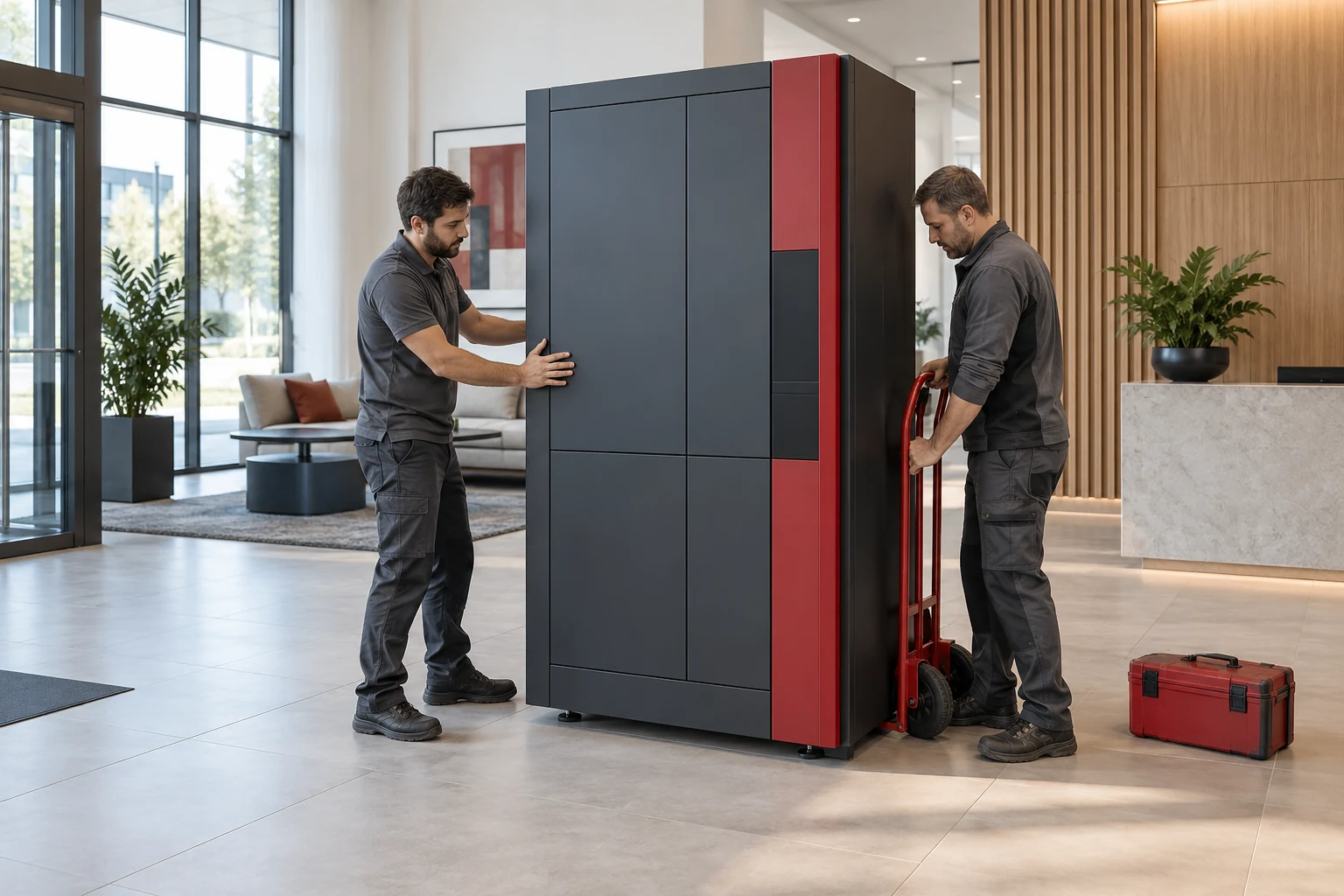
Concept of two technicians positioning a compact crimson retail module in an office foyer

CLARITY BEFORE COMPLEXITY

A clear brief
opens the conversation.

You do not need a finished specification to explore an idea. A description of the site, its typical users, opening hours and practical constraints is a useful beginning.

Our planning checklist brings those questions together so the first conversation can focus on what matters.

Download the planning checklist

Connect what is useful.
Measure what matters.

A scope you can understand

Identify which connections are necessary, which are optional and which need separate technical validation.

A clear definition of success

Agree the intended outcome first, then choose measures that can actually show progress toward it.

A routine with ownership

Make review, follow-up and responsibility part of the plan from the beginning.

LOOKING AHEAD, TOGETHER

A clearer starting point.
A more connected plan.

Explore the questions that turn a retail idea into a considered project.